
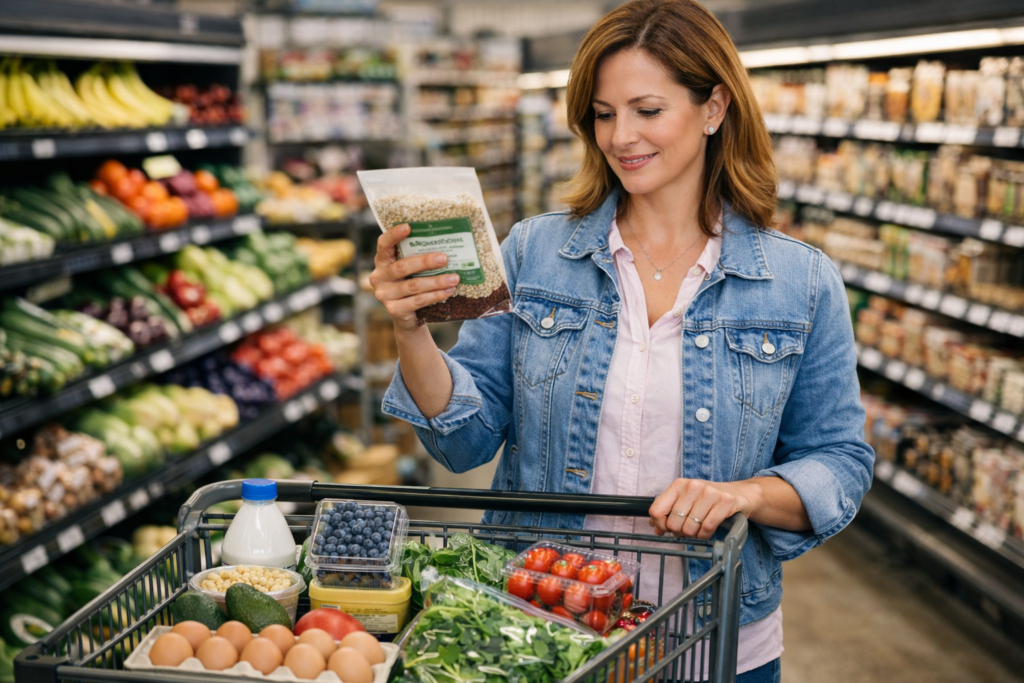
Plus, delicious recipes that support lower blood glucose and hemoglobin A1C
The foods we eat greatly influence how quickly glucose enters our bloodstream, how much insulin our body needs to produce, and how well our cells respond to that insulin over time.
Foods that help lower blood sugar and hemoglobin A1C are typically rich in fiber, protein, healthy fats, and plant compounds that support insulin sensitivity.
Certain foods naturally help stabilize blood sugar and support better metabolic health. Consistently including these foods in your meals can make a meaningful difference in both your daily glucose patterns and long-term markers like A1C.
You may hear the terms “blood sugar” and “blood glucose” used interchangeably. Glucose is the specific type of sugar found in your blood and is your body’s primary source of energy. “Blood sugar” is simply the more familiar term used to describe your blood glucose levels.
What Food Will Keep My Blood Sugar Stable?
Below are four food groups that research consistently associates with improved blood sugar control.
Non-Starchy Vegetables: The Foundation of Blood Sugar Balance
Non-starchy vegetables are one of the most powerful tools for improving glucose control.
A starchy vegetable is a complex carbohydrate – a molecule with many sugars linked together. These sugars break down faster and enter the blood stream more easily. Examples of starchy vegetables are potatoes (both white and sweet), yams, green peas, parsnips, corn and winter squash (pumpkin, butternut squash, etc.).
Non-starchy vegetables have less sugar molecules, which makes them lower in starch, and have higher amounts of fiber, vitamins, and minerals.
The fiber from non-starchy vegetables is key as it helps slow digestion and glucose absorption, and in turn, prevents rapid spikes in blood sugar after meals.
Some great choices include:
- Broccoli
- Cauliflower
- Brussels sprouts
- Spinach
- Kale
- Swiss chard
- Zucchini
- Asparagus
- Green beans
Protein: Helps Prevent Blood Sugar Spikes
Protein plays an important role in stabilizing blood sugar levels. Research shows that including protein before or alongside carbohydrates can significantly reduce post-meal glucose spikes.
Protein also promotes satiety, which can reduce the tendency to overeat or snack frequently on refined carbohydrates.
Good protein choices include:
- Pasture-raised eggs
- Fresh-water fish such as salmon, sardines, and mackerel
- Pasture-raised beef and organic poultry
- Organic lentils and beans
- Tofu or tempeh
Healthy Fats: Support Insulin Sensitivity
Healthy fats are another important component of blood sugar balance as they have minimal direct impact on blood glucose levels. When included with meals, they also slow digestion and glucose absorption.
Certain fats are also associated with improved insulin sensitivity, which helps the body to use glucose more effectively and promotes satiety to help keep you feeling full longer.
Some excellent sources of healthy fats include:
- Avocados
- Extra-virgin olive oil
- Olives
- Raw almonds, walnuts, pecans, and pistachios
- Raw chia, flax, and pumpkin seeds
Many of these foods are key components of the Mediterranean diet, which has been widely studied for its ability to support cardiovascular health and improve blood sugar control.
Spices and Other Plant Foods That May Support Glucose Control
Certain herbs, spices, and plant foods have been studied for their potential to influence glucose metabolism and may provide additional support when used regularly.
Examples include:
- Cinnamon
- Ginger
- Turmeric
- Garlic
- Apple cider vinegar
Incorporating these ingredients into everyday cooking can add flavor while potentially offering additional metabolic benefits.
To Naturally Stabilize Blood Sugar, Balanced Meals Matter Most
While individual foods can help support glucose control, the overall pattern of eating matters most.
Meals that combine non-starchy vegetables, protein, healthy fats, and spices tend to produce more stable blood sugar levels than meals dominated by refined carbohydrates.
Sometimes small adjustments to food choices and meal balance can make a meaningful difference.
Other times, a more personalized approach may be helpful to better understand how your body responds to different foods.
If you’d like guidance in evaluating your current nutrition habits and developing a plan that supports better blood sugar balance, set up a free consultation here.
Recipes to Help Support Glucose Control:
Deva’s Avocado Lime Dressing
1 large, pitted avocado, removed from shell
1/3 cup extra virgin olive oil
4 TBSP apple cider or red wine vinegar
3 TBSP raw honey
½ bunch cilantro
1 TBSP salt
1 tsp black pepper
1 lime, juiced
Blend all ingredients in a food processor or blender until thick and creamy
Use dressing on salads, over veggies, eggs, or poultry.
Egg Roll in a Bowl (15 Minutes)
Recipe adapted from WholesomeYum.com
Servings: 4
1 TBSP avocado oil
4 cloves garlic, minced
3 TBSP fresh ginger, grated or 3/4 tsp ground ginger
1 lb ground beef, chicken or turkey
1 tsp sea salt
1/4 tsp black pepper
6 cups shredded kale mix or greens and carrots chopped with a knife
1/4 cup coconut aminos (or 1-2 TBSP more if you like) or low-sodium soy sauce
2 tsp toasted sesame oil
1/4 cup green onions
Raw sesame or pumpkin seeds, optional
Heat avocado oil in a large cast iron skillet over medium heat. Add garlic and ginger. Sauté for about a minute, until fragrant.
Add the meat. Season with sea salt and black pepper, then use a spatula to break up the meat. Cook until browned, for about 7 – 10 minutes. (Most of the excess oil cooks away at this temperature, but you can drain it if you like.)
Add the vegetables and coconut aminos. Stir to coat. Cook for about 5 minutes, stirring occasionally, until the vegetables are tender.
Remove from heat. Stir in the toasted sesame oil and green onions. If desired, sprinkle with sesame or pumpkin seeds.
Turkey and Spinach Meat Loaf
Recipe adapted from The Blood Sugar Solution
Servings: 4
1 1/2 cups pecans
1 lb lean ground organic turkey
10-oz pkg frozen spinach, thawed and squeezed dry or 1 large bag of fresh kale/combination of greens, sautéed
2 eggs
1 TBSP extra virgin olive oil
1/2 small onion, diced
1 tsp dried basil
1 tsp dried garlic
1/4 tsp sea salt
Pinch of ground black pepper
Preheat oven to 375 degrees.
In a food processor, grind the pecans to a medium-fine texture. In a large mixing bowl, combine the ground pecans with remaining ingredients. Mix well.
Place mixture in a greased loaf pan and bake for 30 minutes. Remove from oven and allow to cool for 5 minutes before serving.
Wild Salmon Salad Wraps
Recipe adapted from The Hormone Fix
Servings: 2 – 4
2 -3 TBSP olive oil-based mayonnaise
1/4 cup diced celery
2 TBSP finely sliced scallions
4 TBSP chopped dill
Zest and juice of 1/2 lemon
2 cans wild salmon, drained
1 sliced avocado
4 medium collard leaves, or other green, stem removed at the base of leaf
In a mixing bowl, combine mayonnaise, celery, scallions, dill, lemon zest, and lemon juice. Fold in salmon. Season with salt and pepper. Place in refrigerator if time before meal.
To serve, place 1/4 of mixture in the center of a leaf with slices of avocado. Fold in sides and roll like a burrito.
Turmeric Cauliflower
Recipe from DrHyman.com
1 large cauliflower, cut into bite-sized florets
1 large red onion, cut into 1/2-inch moons
1/4 cup avocado oil
1 TBSP ground turmeric
1/4 tsp sea salt
Combine cauliflower florets and the rest of the ingredients in a large bowl. Toss to coat then spread onto the parchment lined baking sheet.
Transfer to oven and roast for 40 minutes.
Jill’s Easy Green Beans or Snow Peas
One handful beans or peas per person, washed, dried and ends and strings removed
Pasture-raised butter
Extra virgin olive oil
1 – 2 finely chopped garlic cloves
Salt and pepper
Prepare a cold bath by filling a large bowl with ice water. Separately, fill a medium-sized saucepan halfway with water and bring to a boil. Add beans or peas, bring to a boil again and cook until they turn bright green – about 3 to 5 minutes. Remove from saucepan and place beans/peas in bowl of cold water to halt cooking. Once bean/peas are cool, drain.
In a skillet (large enough to fit your beans/peas) over medium-high heat, melt 1 – 2 TBSP butter and 1 – 2 TBSP olive oil.
When bubbles from the butter subside and butter just begins to turn brown, add beans/peas to pan. Sauté beans/peas until turn slightly brown. Add garlic to pan for 1 – 2 minutes until soft. Add salt and pepper to taste, remove from heat and serve immediately.
French Lentils, Salmon & Fennel Salad
Based on excerpts from Let Me Feed You by Rosie Daykin
Makes 5 servings
1 cup dried French lentils
3 cups water
1 tsp salt
1 cup thinly sliced fennel, about 1 bulb
1 can smoked salmon, drained (about 1 cup)
¼ red onion, peeled and very thinly sliced
1 cup finely chopped flat-leaf parsley
2 TBSP finely chopped dill
2 TBSP olive oil
2 TBSP red wine vinegar
Zest of 1 lemon
1 tsp salt
½ tsp pepper
Place lentils in a sieve and rinse under cold running water. Combine lentils, 3 cups water, and salt in a large pot over high heat. Bring to a boil, then reduce heat and allow the lentils to simmer, covered, for about 30 minutes, until tender. Drain and set aside.
Trim fennel stalks from the bulb and cut the bulb in half. Using a very sharp knife or a mandoline slicer set on the thinnest setting, carefully cut the fennel into very thin slices.
Place lentils, fennel slices, smoked salmon, red onions, parsley, and dill in a large serving bowl. Use a large spoon to gently toss to combine.
In a small bowl, whisk together the remaining ingredients, then pour over the salad and toss again. You may wish to season with a little more salt and pepper to suit your taste.
Store, covered, in the refrigerator for up to 3 days.